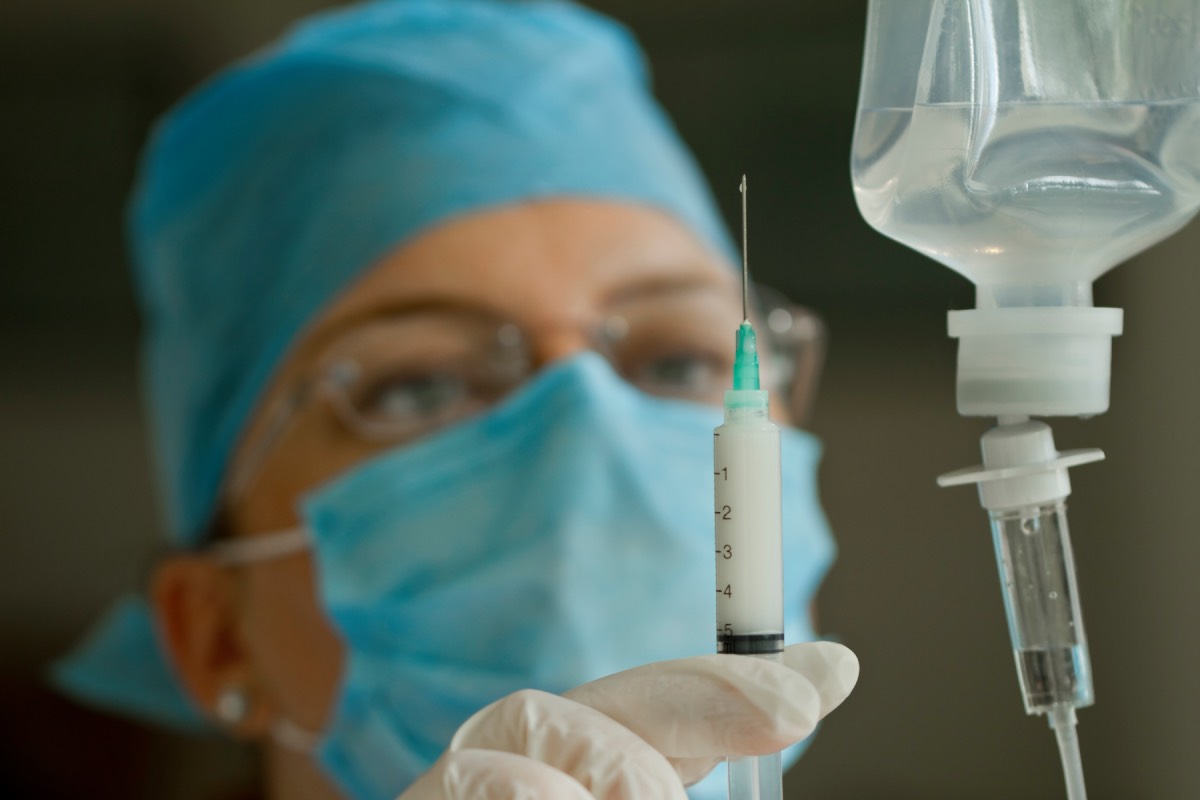
Propofol remains one of the most widely used intravenous anesthetic agents in modern clinical practice, valued for its rapid onset, short duration of action, and favorable recovery profile. However, its capacity to depress respiratory function—even at sedative rather than fully anesthetic doses—is a disadvantage that demands careful attention from anesthesia providers. Understanding the mechanisms underlying propofol-induced respiratory depression, and the strategies available for reducing it, is essential for optimizing patient safety across a broad range of procedural contexts.
Propofol causes respiratory depression primarily through enhancement of inhibitory GABAergic neurotransmission within central nervous system respiratory networks. At the brainstem level, it reduces the sensitivity of central chemoreceptors to both hypoxia and hypercapnia, thereby blunting the two principal drives that sustain adequate ventilation. Critically, this depression manifests even at subanesthetic, sedative concentrations. Blouin et al. demonstrated in healthy male volunteers that conscious sedation with propofol reduced the slope of the hypoxic ventilatory response by approximately 81%, accompanied by nearly 50% reductions in both minute ventilation and tidal volume at SpO₂ = 90%. Four of the eight subjects in that study became transiently hypoxic while breathing room air, despite remaining verbally responsive, underscoring that clinically significant respiratory compromise can occur well within sedative dose ranges.¹ Nieuwenhuijs et al. subsequently clarified that at low propofol concentrations, this depression is localized predominantly to the central chemoreflex loop, with the peripheral carotid body chemoreflex remaining largely intact.²
A common clinical assumption holds that dexmedetomidine offers a meaningfully safer respiratory profile than propofol and can help as an anesthetic agent by reducing the amount of propofol needed for sedation and therefore the risk of respiratory depression. Lodenius et al. challenged this directly in a randomized crossover study, demonstrating that at equi-sedative doses, dexmedetomidine and propofol produced virtually identical degrees of hypoxic ventilatory impairment, with both agents also generating episodes of upper airway obstruction and apnea.³ This finding argues against substituting dexmedetomidine for propofol on respiratory safety grounds alone and redirects attention toward strategies that address the underlying pharmacodynamic risk more directly.
Several strategies may be viable for reducing respiratory depression caused by propofol anesthesia. Targeting moderate rather than deep sedation significantly reduces the frequency of adverse respiratory events, as Schick et al. found in a prospective randomized trial, though they also noted that propofol frequently overshoots intended sedation depth, necessitating continuous vigilance.⁴ Minimizing opioid co-administration is equally important; Miner et al. showed that adding supplemental alfentanil to propofol sedation significantly increased the need for respiratory stimulation without providing meaningful analgesic benefit, affirming that opioid adjuncts compound respiratory risk without commensurate clinical gain.⁵
At the level of drug substitution, both remimazolam and ciprofol have emerged as pharmacologically distinct alternatives for sedation with improved respiratory safety profiles. A meta-analysis by Chang et al. pooling data from 12 randomized controlled trials found that remimazolam was associated with an odds ratio of 0.22 for respiratory depression compared to propofol.⁶ A larger synthesis of 45 randomized controlled trials involving 6,884 patients found that ciprofol—a structural propofol analogue with a cyclopropyl modification—produced substantially lower rates of respiratory depression, apnea, and hypoxia, while maintaining comparable sedation efficacy and superior patient and clinician satisfaction.⁷
Perhaps the most mechanistically novel approach involves pharmacological restoration of the blunted hypoxic drive. Jansen et al. demonstrated in a randomized controlled trial that ENA-001, a BK-channel blocker acting at the peripheral carotid bodies, effectively reversed propofol-induced depression of the hypoxic ventilatory response.⁸ Because propofol acts centrally while leaving the peripheral carotid body chemoreceptors relatively intact at clinical doses, peripherally acting respiratory stimulants could potentially bypass the site of central depression and restore ventilatory responsiveness.²˒⁸
References
1. Blouin, R. T., Seifert, H. A., Babenco, H. D., Conard, P. F. & Gross, J. B. Propofol depresses the hypoxic ventilatory response during conscious sedation and isohypercapnia. Anesthesiology 79, 1177–1182 (1993).
2. Nieuwenhuijs, D., Sarton, E., Teppema, L., Olievier, I., Kruyt, E. & Dahan, A. Respiratory sites of action of propofol: absence of depression of peripheral chemoreflex loop by low-dose propofol. Anesthesiology 95, 889–895 (2001).
3. Lodenius, Å. et al. Sedation with dexmedetomidine or propofol impairs hypoxic control of breathing in healthy male volunteers: a nonblinded, randomized crossover study. Anesthesiology 125, 700–715 (2016)